Thursday, March 7, 2013

"[…] mea culpa, mea culpa, mea maxima culpa. […]" — from the The Confiteor of the Catholic Mass (Wikipedia)


"[…] The gist of the thing is this: novelist Ian McEwan had just been accused [2008] of plagiarising from a historical memoir in his novel Atonement […]
     Authors of the caliber of Margaret Atwood, Kazuo Ishiguro, John Updike, Zadie Smith, Martin Amis and even Thomas Pynchon (who is notorious for shunning publicity) all wrote letters published in that week’s Daily Telegraph, basically standing up and saying 'I am Spartacus' – saying that if [Ian] McEwen was to be so casually accused of this heinous crime then they themselves were intimately acquainted with the crime in question. If anyone was to be waving a tar brush, it seemed, the overwhelming response from the writers was 'tar one, tar all.' The authors all admitted with gay abandon that they themselves had cheerfully plundered other work – be it historical writing, autobiography, primary-source documents, even other novels – in the writing of their own books, and said that such research was the lifeblood of any novel that depended on period detail. […]
     Literary editor of the august Times of London, Erica Wagner, weighed in too: 'We have come to a pretty pass where an author like Ian McEwen has to write on the front page of The Guardian explaining what research is. The myth of originality? There’s no such thing.'
     Research is essential, and we all do it, from all sorts of sources. Some of the authors who wrote their letters in support of Ian McEwen revealed their own sources – Colm Toibin admitted to using actual phrases and sentences from the work of Henry James in The Master, his (fictional) re-imagining of a period in the life of said Henry James; Rose Tremain acknowledged that her book Music and Silence depended, as she put it, 'to a shocking extent' on a small illustrated book by the name of Christian IV by one Birger Mikkelson; […]"
— Alma Alexander, Science Fiction & Fantasy Novelist
Read more...

Wednesday, March 6, 2013

"[...] Little Screens: Short Stories"

This 1939 edition of Cosmopolitan feature a short story
by Ernest Hemingway (From: Azio Media)

"The short story, like the western, is periodically said to be on the brink of a comeback. The most recent example of this boosterism: an article by the New York Times’ new(ish) publishing reporter, Leslie Kaufman, titled 'Good Fit for Today’s Little Screens: Short Stories, in which 'a proliferation of digital options' is said to offer short fiction 'not only new creative opportunities but exposure and revenue as well.' […]
     A short story can be anything from an exquisite specimen of the literary art to a diverting pastime. In its mid-20th-century heyday, when even magazines like Mademoiselle published short fiction by writers like William Faulkner, stories offered readers an hour or two of satisfying narrative entertainment at the end of the day. Television has largely replaced that function, and the literary short story itself became a more rarefied thing, a form in which writers exhibit the perfection of their technique, rather like lyric poetry. With the exception of certain communities of genre writer and readers — most notable in science fiction — these writers aren’t reaching a wider audience because they aren’t especially trying to. The question is: Has (or will) the ongoing revolution in communications changed that? Is there any reason why it should? The Internet has seen a flourishing of online literary journals like the Collagist and Narrative, but the suggestion that these sites are turning short fiction into promising new sources of 'revenue' would probably make their editors laugh.
     Bitterly."
— Laura Miller, Salon
Read more...

"HarperCollins Publishers announced today [November 26, 2012] the launch of HarperTeen Impulse, a digital imprint focusing on Young Adult short stories and novellas. The new imprint will publish short-form works from new and established authors, providing original and exciting new teen ebooks across a wide variety of genres.
     HarperTeen Impulse will publish between one and four titles a month, all of which will go on sale the first Tuesday of that month, branded 'Impulse Tuesday.' Impulse titles will benefit from dedicated program marketing, including extensive social media outreach, monthly newsletters, cross-promotion in HarperTeen print books, and strategic sales promotions."
— PRWeb
Read more...

Speed Writing


"Depressives have Prozac, worrywarts have Valium, gym rats have steroids, and overachievers have Adderall. Usually prescribed to treat Attention Deficit Hyperactivity Disorder [...] the drug is a cocktail of amphetamines that increases alertness, concentration, and mental-processing speed and decreases fatigue. It's often called a cognitive steroid because it can make people better at whatever it is they're doing. When scientists administered amphetamines to college shot-putters, they were able to throw more than 4 percent farther. According to one recent study, as many as one in five college students have taken Adderall or its chemical cousin Ritalin as study buddies.
     The drug also has a distinguished literary pedigree. During his most productive two decades, W.H. Auden began every morning with a fix of Benzedrine, an over-the-counter amphetamine similar to Adderall that was used to treat nasal congestion. James Agee, Graham Greene, and Philip K. Dick all took the drug to increase their output.
     Before the FDA made Benzedrine prescription-only in 1959, Jack Kerouac got hopped up on it and wrote On the Road in a three-week 'kick-writing' session. 'Amphetamines gave me a quickness of thought and writing that was at least three times my normal rhythm,' another devotee, John-Paul Sartre, once remarked."
— Joshua Foer, Slate
Read more…

Monday, March 4, 2013

Do as I do


"W.G. Sebald taught his final fiction workshop at the University of East Anglia during the autumn of 2001. In the literary world he was rapidly gaining renown: there had been the succès d’estime of his first three books, and then the publication of Austerlitz earlier that year. In the classroom—where David Lambert and I were two of sixteen students—Sebald was unassuming, almost shy, and asked that we call him Max. When discussing students’ work he was anecdotal and associative, more storyteller than technician. He had weary eyes that made it tempting to identify him with the melancholy narrators of his books, but he also had a gentle amiability and wry sense of humour. We were in his thrall. He died three days after the final class.
     As far as I’m aware, nobody that term recorded Max’s words systematically. However, in the wake of his death, David and I found ourselves returning to our notes, where we’d written down many of Max’s remarks. These we gleaned and shared with our classmates. Still, I wish we’d been more diligent, more complete. The comments recorded here represent only a small portion of Max’s contribution to the class."
— David Lambert & Robert McGill, (via Richard Skinner)
Read more…

Buy all of W.G. Sebald's books here...

Saturday, March 2, 2013

"[...] a thousand endearing quirks and a bold and unorthodox creativity [...]"


"Madeleine L’Engle’s 1962 novel A Wrinkle in Time—one of the best-loved and best-selling children’s books of the past sixty years—was initially rejected by at least two dozen publishers. The story goes that later on, whenever L’Engle attended a literary event, she would carry the rejection letters in her purse. If editors happened to mention to her that they regretted not having had the chance to publish the book, she would whip out the proof that they had passed it up. Like most good stories, this one is probably apocryphal. But it ought to be true, not only because of its poetic justice, but also because it is entirely of a piece with L’Engle’s persona: prone to drama, a little irascible, and always asserting her mastery of her own narrative.
     As yet there is no full-length biography of L’Engle, who died in 2007 at age eighty-eight. Those of us who memorized her books as children might wonder who would want to read one. Isn’t Meg Murry, the gawky, headstrong protagonist of A Wrinkle in Time, a self-portrait of L’Engle as the bookish and brilliant adolescent she must have been?
     And wasn’t the Austin series a chronicle of her adult family life—the New England farmhouse bustling with children, pets, and glamorous friends always coming and going? But Listening for Madeleine, a lightly edited compilation of interviews conducted by Leonard S. Marcus with a variety of people who knew L’Engle, makes clear that the truth was more complicated. Just as reality plays an important role in even L’Engle’s most fantastic fiction, fantasy also tended to intrude on her representations of reality, so that what we imagine to be autobiography is in fact something far less stable."
— Ruth Franklin, BookForum
Read more…

Buy Listening for Madeleine and all of L'Engle's books here...

Friday, March 1, 2013

Retirement is a four letter word...


"Ruth Rendell's most famous creation, Chief Inspector Wexford, has retired, and at the age of 83, with more than 70 books under her belt and a Labour life peerage, she'd be forgiven if her thoughts were beginning to drift towards a gentle exit from the world of letters. After all, the 79-year-old Philip Roth, after a similarly half-century-spanning career, told the world he was 'done' with writing last year, and hasn't looked back.
     When I ask if this is the case, Rendell, resplendent and formidable in a red velvet cardigan, leans forward on the sofa in her bright Maida Vale house and looks horrified. 'I couldn't do that. It's what I do and I love doing it,' she says. 'It's absolutely essential to my life. I don't know what I would do if I didn't write.'"
— Alison Flood, The Guardian
Read more…

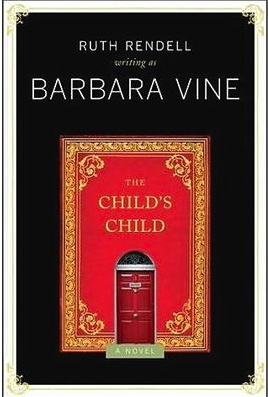
Get Ruth Rendell's latest (writing as Barbara Vine) here...

"Political Pornography"


"Beyond the most hard-core fiscal policy wonks, however, it’s difficult to imagine anyone outside the [Washington DC] Beltway being interested in this volume’s [The Price of Politics] granular telling and retelling of these matters, its almost blow-by-blow chronicle of the maneuvering, haggling, grandstanding and ideological positioning that have taken root on both sides of the aisle."
— Michiko Kakutani, The New York Times
Read more...

"The world rendered [in The Choice, by Bob Woodward] is an Erewhon in which not only inductive reasoning but ordinary reliance on context clues appear to have vanished. […]
     This tabula rasa typing requires rather persistent attention on the part of the reader, since its very presence on the page tends to an impression that significant and heretofore undisclosed information must have just been revealed, by a reporter who left no stone unturned to obtain it. […]
     In any real sense, these books are 'about' nothing but the author’s own method, which is not, on the face of it, markedly different from other people’s. Mr. Woodward interviews people, he tapes or takes ('detailed') notes on what they say. He takes 'great care to compare and verify various sources’ accounts of the same events.' He obtains documents, he reads them, he files them […]
     The genuflection toward 'fairness' is a familiar newsroom piety, the excuse in practice for a good deal of autopilot reporting and lazy thinking but a benign ideal.
     In Washington, however, a community in which the management of news has become the single overriding preoccupation of the core industry, what 'fairness' has too often come to mean is a scrupulous passivity, an agreement to cover the story not as it is occurring but as it is presented, which is to say as it is manufactured."
— Joan Didion, The New York Review of Books
Read more…


"Erewhon [published anonymously by Samuel Butler in 1872] satirizes various aspects of Victorian society, including criminal punishment, religion and anthropocentrism. For example, according to Erewhonian law, offenders are treated as if they were ill whilst ill people are looked upon as criminals."
— Wikipedia
Read more…

Buy books by Samuel Butler, Joan Didion and Bob Woodward here…