Tuesday, January 31, 2012

Exotic Spices

From: ABEbooks


"The great film director's [Erich von Stroheim] first book [1935], a novel about Hungarian Gypsy life, written when he was down on his luck, wearing out his welcome in Hollywood after several costly masterpieces which were nevertheless commercial flops.
     This copy wonderfully Inscribed to fellow author Jim Tully, utilizing the entire front fly: 'Worldly goods which you possess — own you and destroy you! Love must be like the blowing wind — fresh and invigorating. Capture the mind within walls and it becomes stale. Open tents — open hearts. Let the wind blow! (Thus runs a Gypsy song.) To Jim Tully, From one bum to another! With affectionate regard, Erich von Stroheim. Please read it! Please like it! Please talk about it! Please write about it! And — please — ask your friends to buy it! (That mortgage comes due soon).'
     Though they apparently never worked on a film together, Tully and von Stroheim clearly traveled in the same circles in Hollywood [...]"
ABEbooks

Here's an edition (1952) of Paprika from Harlequin—back before the Winnipeg publisher hit pay dirt with its tried-and-true Romance formula.


For sample pages of the book, go here...

Monday, January 30, 2012

Paper Rocks


"Last week Maurice Sendak visited The Colbert Report for a very entertaining two-part interview. After commenting on the complexity of children, the 'hopelessly vile' politician Newt Gingrich, and the abysmal current state of children’s literature, Sendak weighed in on e-books: 'Fuck them, is what I say,' griped Sendak. 'I hate those e-books. They cannot be the future. They may well be. I will be dead, I won’t give a shit.'
While the future is arguably already upon us when it comes to e-books, Sendak isn’t the only lauded author to speak out against the technology recently.
     At the Hay Festival of Literature and the Arts in Cartagena, Colombia, Jonathan Franzen spoke of his dislike of e-books as well. 'The technology I like is the American paperback edition of Freedom. I can spill water on it and it would still work! So it’s pretty good technology. And what’s more, it will work great 10 years from now. So no wonder the capitalists hate it. It’s a bad business model,' said Franzen."
—Carmel Lobello, Death+Taxes
Read more...


"Maurice Sendak looks like one of his own creations: beady eyes, pointy eyebrows, the odd monsterish tuft of hair and a reputation for fierceness that makes you tip-toe up the path of his beautiful house in Connecticut like a child in a fairytale. Sendak has lived here for 40 years – until recently with his partner Eugene, who died in 2007; and now alone with his dog, Herman (after Melville), a large alsatian who barges to the door to greet us. 'He's German,' says Sendak, getting up from the table where he is doing a jigsaw puzzle of a monster from his most famous book, Where the Wild Things Are. Sotto voce, he adds: 'He doesn't know I'm Jewish.'
     At 83, Sendak is still enraged by almost everything that crosses his landscape. In the first 10 minutes of our meeting, he gets through: Ebooks: 'I hate them. It's like making believe there's another kind of sex. There isn't another kind of sex. There isn't another kind of book! A book is a book is a book.'"
— Emma Brockes, The Guardian
Read more...

Thursday, January 26, 2012

"Is that a broomstick between your legs — or just a flamingo?"

"Alice trying to play croquet with a flamingo" from Lewis Carroll's
 
Alice's Adventures in Wonderland 
(1865) original illustration:
John Tenniel  (from: Wikimedia Commons)

"Huddled together in the chill January wind, the players listened as a PPE fresher in a black cape read the rules of the game: a Quaffle through a hoop would score 10 points, capturing the Snitch would yield a bountiful 30, and under no circumstances was there to be any 'grabbing of broomsticks.' With that, they were off: two teams, with seven players each, racing round a playing field and trying to shoot a basketball through hula-hoops. [...]
     Known as Muggle Quidditch to those for whom JK Rowling's lexicon is as familiar as any entry in the dictionary, the game was adapted for non-wizards around seven years ago in the US, where it has since caught on and become a familiar pastime for students at some of the country's best-known institutions, including Yale, Harvard and Tufts (Wipfler's college). Instead of flying, players run with broomsticks between their legs, and instead of a golden ball with wings attached, the Snitch is a person dressed in yellow. Although tackling is frequent and being hit by a volleyball, or 'bludger,' is likely, the 'spirit of Quidditch' is encouraged. As one player for the University college team put it: 'If you're massive and there's a little person, don't run into them.'
— Lizzie Davies, The Guardian
Read more...
For a list of games found in works of fiction, go here...


Buy books by Lewis Carroll and
J. K. Rowling here...

Wednesday, January 25, 2012

Virtual Shoplifting


“'It’s never been easier to distribute creative work. At the same time, it’s never been harder to get paid for it,' according to former Billboard editor and New York Times writer Robert Levine. [...]
     For those who think the Internet should remain a sprawling bazaar of free samples, a utopian clearing house for consumers who don’t pay, Levine has a harsh, well-researched wake-up call: 'It’s time to ask whether any significant professional media business can thrive in an environment where information can be taken so easily. When nearly a quarter of global Internet traffic consists of pirated content.'
     In 2003, for example, NBC delivered an $800-million (U.S.) profit to its owner, General Electric. Just seven years later, the network was looking to lose more than $100-million. At the same time, Levine says, while viewers were busy downloading Saturday Night Live from the Internet, Google was poised to buy YouTube for $1.65-billion."
— Paula Todd, The Globe and Mail
Read more...

Buy this book here...
And see a related article here...

Monday, January 16, 2012

At Bloggerheads


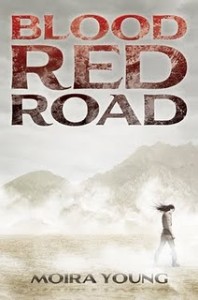
"A literary punch-up that had been brewing for a while finally erupted between a bunch of readers, authors and agents on Goodreads – the vast online site where millions of members discuss the world's books. In the same week that award-winning children's writer Anthony McGowan caused a stir with his 'scorching' Guardian review of Blood Red Road by Costa winner Moira Young, the Goodreads flame war flared across Twitter, sparked by writers and agents who seemed to be stamping on negative reviews.
     It all started with a 'snarky' (or 'honest,' depending on who's side you're on) review of a much-hyped YA novel, Tempest by Julie Cross, just published in the UK by Macmillan Children's Books. A sarcastic response and put-downs of reader views on the Goodreads site by Cross's author friends, and comments by her agent, caused outrage. While Cross responded gracefully, other YA authors and agents took the fight to Twitter in a spectacularly misjudged bout of reader-bashing, 'sneering at the people who make their ****ing books reach the NYT bestseller list,' The Bookwurrm judged.
     Things escalated further as authors and agents publicly discussed rigging the ratings on Goodreads and Amazon to push up the visibility of good reviews and 'hide' bad ones."
— Julie Bertagna, The Guardian
Read more...

Thursday, January 12, 2012

Demanding Supply; Supplying Demand


"In a typically razor-sharp exchange of dialogue which establishes – yet again – that The Simpsons provides the most coruscating illumination of contemporary mores, Lisa says to her grade school teacher that 'Good looks don't really matter,' to which Ms Hoover replies: 'Nonsense, that's just something ugly people tell their children.' Stripping away the layers of irony from this statement we can reveal the central premise of Catherine Hakim's book, which is that not only do looks matter, but that they should matter a great deal more. Furthermore, the people who tell young people – and in particular young women – that their beauty and sex appeal are of little importance are themselves ugly, if not physically then at least morally.
     For, as Hakim sees it, [in Honey Money: The Power of Erotic Capital] it is an 'unholy alliance' of wannabe patriarchs, religious fundamentalists and radical feminists who have – in Anglo-Saxon countries especially – acted to devalue what she terms 'erotic capital.' In Hakim's estimation, for all young women, and in particular those who are without other benefits – financial, intellectual, situational – an entirely legitimate form of self-advancement should consist in their getting the best out of – if you'll forgive the pun – their assets."
— Will Self, The Guardian
Read more...

"I THOUGHT THIS book would be a treat. I liked everything about it, in theory: its subject matter (erotic capital, such as charm, beauty, sexuality, charisma and social skills — what could be more fun?); its author, who has an interesting reputation as an academic willing to challenge orthodoxies about what is good for women (she is a senior research fellow of sociology at the London School of Economics); its promise of big ideas about how society works.
     Honey Money however, is an acute disappointment. It looks like a book. It has hard covers, 372 pages, chapter headings, dozens of sources and footnotes, a fat price ticket and a press release from its publishers. But looks are deceptive. There is no structured argument being worked through in its pages. Instead, bewildered readers find themselves presented with repetitious, rambling, contradictory, ill-argued assertions, without the faintest sense from the author that she has written these sentences before. It is as if Catherine Hakim wrote drafts of her chapters, hadn’t quite worked out the essence of her thoughts, and then gave up the struggle, leaving us to figure out what she means.
     I’ll spare you the details of the incoherence and the baffling asides — Hakim’s belief that discrimination against the overweight is justified by the human rights of everyone else; her admiration for Silvio Berlusconi’s smiles; her assertion that, on the whole, only young women like sex. Stripped down (where was her editor?), the selling point of her book is that erotic capital is as important to our success in life as our wealth, education or social networks.
     This insight is described by her publisher as ground-breaking. Well, not since I first heard the story of Cinderella has that been news to me, or I suspect to you. Hakim claims that it’s a revelation to sociology, where the theories about the power relations between men and women apparently pay no attention to the role of attraction and sexual desire."
—Jenni Russell, The Sunday Times (via The Hatchet Job of the Year)
Read more...

Wednesday, January 11, 2012

One Step, One Word at a Time...

Photo: Tristan Mills (Tombstone Territorial Park, 2010)


Once more it's time to take advantage of the blank page we call the "New Year" and resolve to take all those scraps of thoughts and snippets of ideas that we know, deep in our souls, will one day turn into poems or short stories and commit them to paper.
     The 9th annual Elora Writers' Festival Writing Competition is up and running—so you now have a deadline to aim for: Friday, April 27, 2012. The theme of this year's competition is "A Journey."
     On your mark, get set, go...

     Have you had trouble accessing contest information? We've fixed it: find the links to all the info you need here... at Writer's Life, the blog of Contest Chair, Jean Mills.

     For tips on taking that first step go here...
  
     And here are some other articles that might help you get going: Start by starting... ; And now a word from our Judges... ; The Job of Writing; and "You cannot plow a field by turning it over in your mind." — Author Unknown

For information about the 2013 competition, go here...

          If you have even more questions, contact our Competition Chair Jean Mills at jrmills@rogers.com