Tuesday, March 19, 2013

Ripe for the picking: £2,500

From: Indulgy


Since our Writing Competition is on hold, here's word of a competition ripe for the picking — and the deadline isn't so bad either: May, 31, 2013.
     I love a good deadline. It's like an alarm bell that calls up the Muse...

"The first Festival of Garden Literature celebrates garden writing as a genre, with a particular emphasis on Memoir. We are holding a writing competition for a piece of literary memoir inspired by, or set in, a garden.
    Judged by Antonia Fraser, Adam Nicolson and Sigrid Rausing, a prize of £2,500 will be awarded to the winning entry. Maximum word length: 2,500 words. […]
     The Prize is open to writers of any nationality writing in English, 16 years old and over at the time of the closing date.
     Entries must be entirely the work of the entrant and by submitting you are confirming that the work is your own. Any evidence to the contrary will result in immediate disqualification.
     Entries must never have been published, self-published, published on any website, blog or online forum, broadcast nor winning or placed (as in 2nd, 3rd,, runner up etc) in any other competition. Simultaneous submissions are allowed but will become ineligible should they win a prize or be published prior to the prize-giving date; entry fees will not be refunded.
     The deadline date for entries is 12 midnight (UK time) on Friday 31st May 2013 (postal entries postmarked 31st May but received later will be accepted)."
— Granta
Read more…

Here's a note about the Elora Writers' Festival Competition in 2014.

And come and hear Sonia Day read from her works on May 26 at the Elora Writers' Festival — she's a master of "Garden Literature."

Monday, March 18, 2013

"Many were tweeting furiously."

From: Infmetry


"The world of digital publishing start-ups brings to mind blogging in its nascent stages. The guiding principle seems to be: if anyone can scribble on the Internet’s wall, anyone can become an author, and any text can become a book. Online, a book’s form warps into something more malleable, and fired-up digital publishers are trying to figure out how to turn that into a business—even if it means a proliferation of books that might as well have been blog posts.
      'A book is a startup,' declared Peter Armstrong in a speech about his serialized book company, Leanpub. 'I said it in 2010, and I’ll say it again.' Armstrong had on Steve Jobs couture—a long-sleeved black shirt and blue jeans—as he addressed a packed audience in New York at the Tools of Change conference, three days of workshops about the future of books, specialized breakout sessions, and an e-reading exhibition called the 'Digital Petting Zoo.' […]
     Armstrong suggests that a book and a start-up are each 'a risky, highly creative endeavor undertaken by a small team, with low probability of success.' In either case, he says, you can go into 'stealth mode'—which, he contends, will easily result in creating something that nobody wants. 'To say you’re going to go off in a room and write the perfect thing without getting feedback from anybody is—I don’t want to say "arrogant"—but I couldn’t do it.' Editors, he adds, 'function as a good proxy for readers'—but are not as effective as readers themselves.'"
— Betsy Morais, The New Yorker
Read more…

Speculative Fact


News of secret courts being introduced in the world's oldest democracy [the U.K., not Greece] should scare any rational human. The right to a public trial has survived feudalism, Henry VIII and the industrial revolution, but couldn't stand up to the forces of global capitalism. Secret courts could be an idea from Alan Moore's polemic on Thatcher's Britain, V for Vendetta (today enjoying a second life inspiring Occupy protestors and the Anonymous hacker group) or from Homeland, the latest novel from science-fiction author Cory Doctorow.
     Doctorow's 2007 young adult novel Little Brother introduced teenage readers to the writer's outspoken ideas on technology and personal freedom. The novel's title is of course a play on Big Brother, from the granddaddy of all dystopian SF, George Orwell's 1984."
— Damien Walter, The Guardian

Buy all of Cory Doctorow's books here...

Sunday, March 17, 2013

Screen Writer


"When I was 13 or so, I watched a movie in which a young writer (played by Frank Sinatra?) and his girlfriend go to an Italian restaurant to celebrate the acceptance of his first short story. The restaurant’s owner is celebrating too, as are all the people sitting at the other tables, which are covered with checkerboard tablecloths and lit by candles dripping wax. Everyone wishes the writer well, no one more so than I, who tried to foresee such a moment when I, too, would become a writer. The acceptance of the story. The cheers. The girl and the life of my dreams.
     Most films about the writing life are more accurate, because writers write them. And rarely is the writer shown as successful, triumphant or — are you kidding? — happy."
— Roger Rosenblatt, The New York Times
Read more…

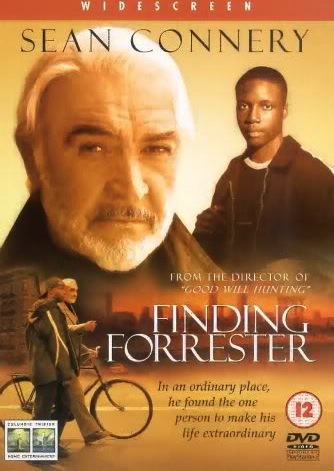
"The movie ['Finding Forrester'] contains at least two insights into writing that are right on target. The first is William's advice to Jamal that he give up waiting for inspiration and just start writing. My own way of phrasing this rule is: The Muse visits during composition, not before. The other accurate insight is a subtle one. An early shot pans across the books next to Jamal's bed, and we see that his reading tastes are wide, good and various. All of the books are battered, except one, the paperback of James Joyce's Finnegans Wake, which looks brand new and has no creases on its spine. That's the book everyone buys but nobody reads."
— Roger Ebert, Chicago Sun-Times
Read more…

What I find irritating about movie (and television) depictions of writers-at-work is the mandatory scene of the anguished protagonist pulling a besmirched-with-words sheet of paper from his/her typewriter, vehemently crushing it into ball and tossing it into an overflowing — with similar tainted and disfigured pages — wastepaper basket.
     No matter what our omnipresent "inner critic" says about it, who in their right mind would discard a first draft?
     And who, in this post-"Murder She Wrote" age, still uses a typewriter?

Friday, March 15, 2013

More than a Bobbysoxer


"'It’s got a lot of stuff, but if you’re asking me did I open my veins, the answer is no. There’s stuff in there about me working with the Mafia and Vegas and the early days. But it’s no kiss-and-tell. I kept some things secret.'
     My Way, An Autobiography, co-written with David Dalton, will be published by St. Martin’s Press on April 9. His life, of course, is the stuff of legend, starting out as a teenage heart-throb from Ottawa in the late 1950s, and rising to become one of the most admired, and wealthy, performers of his generation.
     The book isn’t even on the shelves and it’s creating a buzz.
     'I’ve had calls from film producers who heard about it,' said Anka. 'But I’m not there, yet. Maybe it’ll be a stage play. I just want to get it out and go from there.'"
— Ted Shaw, The Windsor Star
Read more…

"Born July 30, 1941, in Ottawa into a tight-knit Canadian family, Paul Anka didn’t waste much time getting his life in music started. He sang in the choir at Church and studied piano. He honed his writing skills with journalism courses, even working for a spell at the Ottawa Citizen. By 13, he had his own vocal group, the Bobbysoxers. He performed at every amateur night he could get to in his mother’s car, unbeknownst to her of course. Soon after, he won a trip to New York by winning a Campbell’s soup contest for IGA Food Stores that required him to spend three months collecting soup can labels. It was there his dream was solidified, he was going to make it as a singer composer; there was not a doubt in his young tenacious mind.
     In 1956, he convinced his parents to let him travel to Los Angeles, where he called every record company in the phone book looking for an audition. A meeting with Modern Records led to the release of Anka’s first single, 'Blau-Wile Deverest Fontaine.' It was not a hit, but Anka kept plugging away, going so far to sneak into Fats Domino’s dressing room to meet the man and his manager in Ottawa. When Anka returned New York in 1957, he scored a meeting with Don Costa, the A&R man for ABC-Paramount Records. He played him a batch of songs that included 'Diana' – Costa was duly enthusiastic about the potential of the young singer and songwriter. The rapid and enormous success of 'Diana'- his first number one hit – made him a star."
— Paul Anka (official web site)
Read more...

Preorder Paul Anka's memoir here...

Thursday, March 14, 2013

Meet the winner of the 2012 Charles Taylor Prize for Literary Non-Fiction on May 26 in Elora


"At launch ceremony held on Monday, March 5, 2012 in the Sovereign Ballroom of downtown Toronto’s Le Meridien King Edward Hotel, author Andrew Westoll was named the winner of the 2012 Charles Taylor Prize for Literary Non-Fiction for his book The Chimps of Fauna Sanctuary: A Canadian Story of Resilience and Recovery, published by HarperCollins. Noreen Taylor, chair of the Charles Taylor Foundation, announced the winner’s name before a packed audience of invited guests, publishers, and media, and presented him with a cheque for $25,000 and a specially commissioned crystal award, designed by Toronto graphic designer Peter Enneson, and created by Cascade Crystal.
     The remaining nominees each received a $2,000 honorarium. [...]
     The previous winners of the Charles Taylor Prize for Literary Non-Fiction are Wayne Johnston for Baltimore’s Mansion, published by Knopf Canada and awarded the prize on May 8, 2000; Carol Shields for Jane Austen, published by Penguin Books Canada and awarded the prize on April 22, 2002; Isabel Huggan for Belonging: Home Away From Home, published by Knopf Canada and awarded the prize on April 19, 2004; Charles Montgomery for The Last Heathen: Encounters With Ghosts and Ancestors in Melanesia, published by Douglas & McIntyre and awarded the prize on February 28, 2005; J. B. MacKinnon for Dead Man in Paradise, published by Douglas & McIntyre and awarded the prize on February 27, 2006; Rudy Wiebe for Of This Earth: A Mennonite Boyhood in the Boreal Forest, published by Knopf Canada and awarded the prize on February 26, 2007; Richard Gwyn for John A.: The Man Who Made Us, The Life and Times of John A. Macdonald, Volume One: 1815 – 1816, published by Random House Canada and awarded the prize on March 3, 2008; Tim Cook for Shock Troops: Canadians Fighting the Great War, 1917 – 1918, Volume Two, published by Viking Canada Canada and awarded the prize on February 9, 2009; Ian Brown for The Boy in the Moon: A Father’s Search For His Disabled Son, published by Random House Canada and awarded the prize on February 8, 2010; [and] Charles Foran for Mordecai: The Life & Times, published by Knopf Canada and awarded the prize on February 14, 2011."
— Charles Taylor Prize
Read more...

Find out more about Andrew Westoll and the 2013 Elora Writers' Festival lineup of authors here...

And buy all their books here...

Wednesday, March 13, 2013

"I could be handy mending a fuse/ When your lights have gone." — Paul McCartney


"Fans of Edward O. Phillips and his alter-ego protagonist, Geoffry Chadwick, will be pleased to learn that there’s a new book in town.
     Phillips has always had a loyal following in the gay community, with his understated thrillers-cum-comedy-of-manners starring urbane, gay, Montreal anglophone Geoffry Chadwick, but I think he is unique in the loyalty he commands from a broader sector of the reading public: PLUs, People Like Us. (Or at least, people like me.)
     Women of a certain age appreciate his well-mannered and sophisticated approach to life, and cherish his biased mandates about proper protocol and appropriate apparel (especially shoes). An even wider audience – anyone who savours Wildean aphorisms and pronouncements – will also welcome his frequently raunchy but always germane wit. […]
     I have always enjoyed the edge in Phillips’s writing, but this time there is an added depth. He deals with aging People Like Us – that’s everyone. It’s nice to have someone notice."
— Betty Jane Wylie,
The Globe and Mail
Read more…

Buy all of Edward O. Phillips' books here...